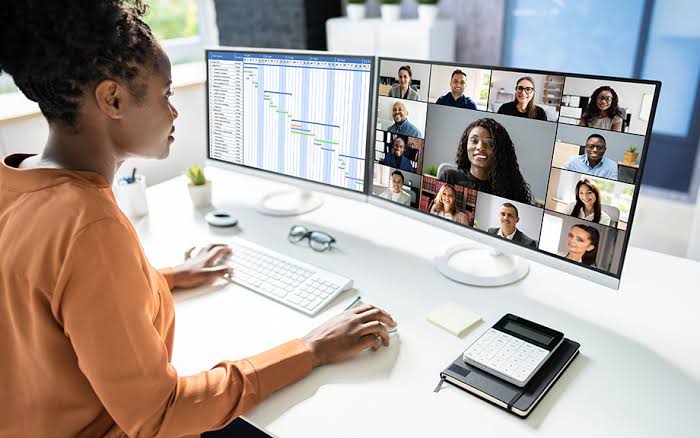
The Remote Work Management Challenge
Remote work management requires the deliberate construction of the visibility, connection, and coordination infrastructure that physical co-location provides automatically — and it demands that managers develop new capabilities for the work that proximity previously made effortless. The manager who led an in-person team through the informal hallway conversation, the casual read of team morale from facial expressions and body language, and the spontaneous collaboration that proximity enables must, in the remote context, replace each of these with deliberate, structured equivalents that produce the same management information and the same team cohesion without the physical presence that makes them effortless in the co-located environment.
The remote work management failure mode that most consistently produces the team disengagement and performance deterioration that opponents of remote work point to as evidence of its limitations: the management approach that simply moves the in-person management style online without the structural adaptations that remote work requires. The manager who conducts the same weekly team meeting via video call, who checks in with team members the same way they did in person, and who evaluates performance through the same activity observation that proximity enabled has not adapted their management approach to the remote context — and the gaps that the unadapted approach creates in visibility, connection, and coordination produce the outcomes that the unadapted manager attributes to remote work itself rather than to the absence of the management adaptation it requires.
Communication Architecture for Remote Teams
The remote team communication architecture that most effectively balances the information flow that coordination requires with the asynchronous work focus that productivity demands: the deliberate differentiation between synchronous communication (the real-time conversation through video call, voice call, or synchronous chat that is appropriate for the discussions requiring immediate back-and-forth, the relationship-building interactions that real-time human presence most effectively provides, and the complex problem-solving that benefits from the creative interaction that real-time communication enables) and asynchronous communication (the written documentation, the recorded video, the threaded discussion, and the project management tool update that is appropriate for the information sharing that does not require immediate response and that benefits from the thoughtfulness that asynchronous composition enables).
The remote communication norm that most clearly reduces the meeting load that remote work is often criticised for increasing while maintaining the coordination that collaboration requires: the default-to-async principle that treats the synchronous meeting as the exception for the interactions that genuinely require real-time back-and-forth rather than the default for all communication that was previously conducted in person. The question that can be answered by reading a document, the update that can be communicated by a written status, and the decision that can be made by a clearly framed written proposal with written responses are each interactions that the default-to-async principle handles without a meeting — reserving the meeting for the discussions where the real-time interaction genuinely adds value that the asynchronous alternative cannot provide.
Performance Management in Remote Settings
The remote performance management approach that most effectively assesses team member performance without the activity visibility that physical co-location provides: the outcome-based performance framework that evaluates what team members accomplish rather than what they are observed doing. The remote manager who attempts to assess performance through the monitoring of online status, the tracking of message response times, and the surveillance of computer activity is measuring the appearance of work rather than the quality of work — and the team members who learn to optimise for the monitored activity signals rather than the actual outcomes have been incentivised to perform the wrong thing. The outcome framework that specifies the specific deliverables, the specific quality standards, and the specific timelines that define adequate performance in each role enables the remote performance assessment that activity monitoring cannot reliably provide.
The performance conversation adaptation that most effectively maintains the feedback quality that in-person management provides in the remote context: the structured one-on-one that is scheduled consistently, protected from cancellation, and explicitly divided between the operational discussion (what is the team member working on, what obstacles are they encountering, what decisions do they need?) and the developmental discussion (how are they growing, what feedback do they need, what career development is happening?). The remote one-on-one that is consistently conducted, that covers both the operational and the developmental dimensions, and that the manager prepares for specifically rather than treating as the catch-up call that fills whatever time remains provides the management investment that in-person management’s informal interaction partially substitutes for.
Remote Culture and Connection
The remote team culture investment that most effectively builds the belonging and the relationship quality that in-person work provides through daily social interaction: the structured social interaction that the remote context requires to be explicitly designed rather than naturally arising. The virtual coffee chat that pairs team members for twenty-minute informal conversations, the virtual team lunch where the meeting agenda is explicitly the social connection rather than the project update, and the async celebration channel where wins are shared and acknowledged are all deliberate culture investments that create the social fabric of the remote team — not as effective as the daily in-person social interaction that they supplement, but significantly more effective than the purely work-focused communication that treats remote work as an information exchange rather than a human work environment.
The remote team belonging investment that most efficiently identifies and addresses the isolation risk that remote work creates for specific team members: the regular individual check-in that specifically asks about the team member’s experience of remote work — not just the project status — and that invites the honest sharing of whether they are feeling connected, whether they have what they need to do their best work, and whether there are aspects of the remote arrangement they find challenging. The manager who discovers through these conversations that a specific team member is struggling with isolation, that another is finding the home environment incompatible with focused work, and that a third would benefit from more frequent check-ins has the information that allows specific, targeted support rather than the generic remote work policy that serves the average without addressing the individual variation.
Hybrid Work Design
The hybrid work model design that most effectively captures the benefits of both remote and in-person work while avoiding the worst of each: the deliberate specification of which activities are best conducted in person (the complex collaborative problem-solving that benefits from the whiteboard and the physical presence, the relationship-building interactions that create the trust that remote collaboration depends on, and the creative brainstorming that generates the unexpected connections that planned remote collaboration misses) versus which activities are best conducted remotely (the focused individual work that the home environment’s freedom from interruption enables, the flexible schedule that accommodates the caregiving and personal wellbeing needs that the fixed office schedule constrains, and the deep work that the open-plan office’s ambient noise makes difficult). The hybrid model that is designed around the activity-to-location matching rather than the day-count requirement produces better outcomes than the arbitrary mandates that specify how many days must be spent in the office without distinguishing what those days should accomplish that home days cannot.
The hybrid work equity challenge that most requires deliberate design attention: the proximity bias that systematically advantages the employees who are in the office more frequently in the performance evaluations, the promotion decisions, and the informal information access that in-person presence provides. The hybrid organisation that does not address proximity bias creates the two-tier workforce in which remote workers are systematically disadvantaged relative to in-person workers — producing the talent attrition among the remote workers who have the most options and who leave for organisations whose hybrid model does not reproduce the in-person advantage that the pre-remote workplace maintained in a new format. The hybrid design that explicitly addresses proximity bias through the inclusive meeting practices, the consistent performance evaluation standards, and the deliberate information sharing that prevents the in-office information advantage is the design that produces the genuine equity that retains the distributed talent the hybrid model is intended to accommodate.